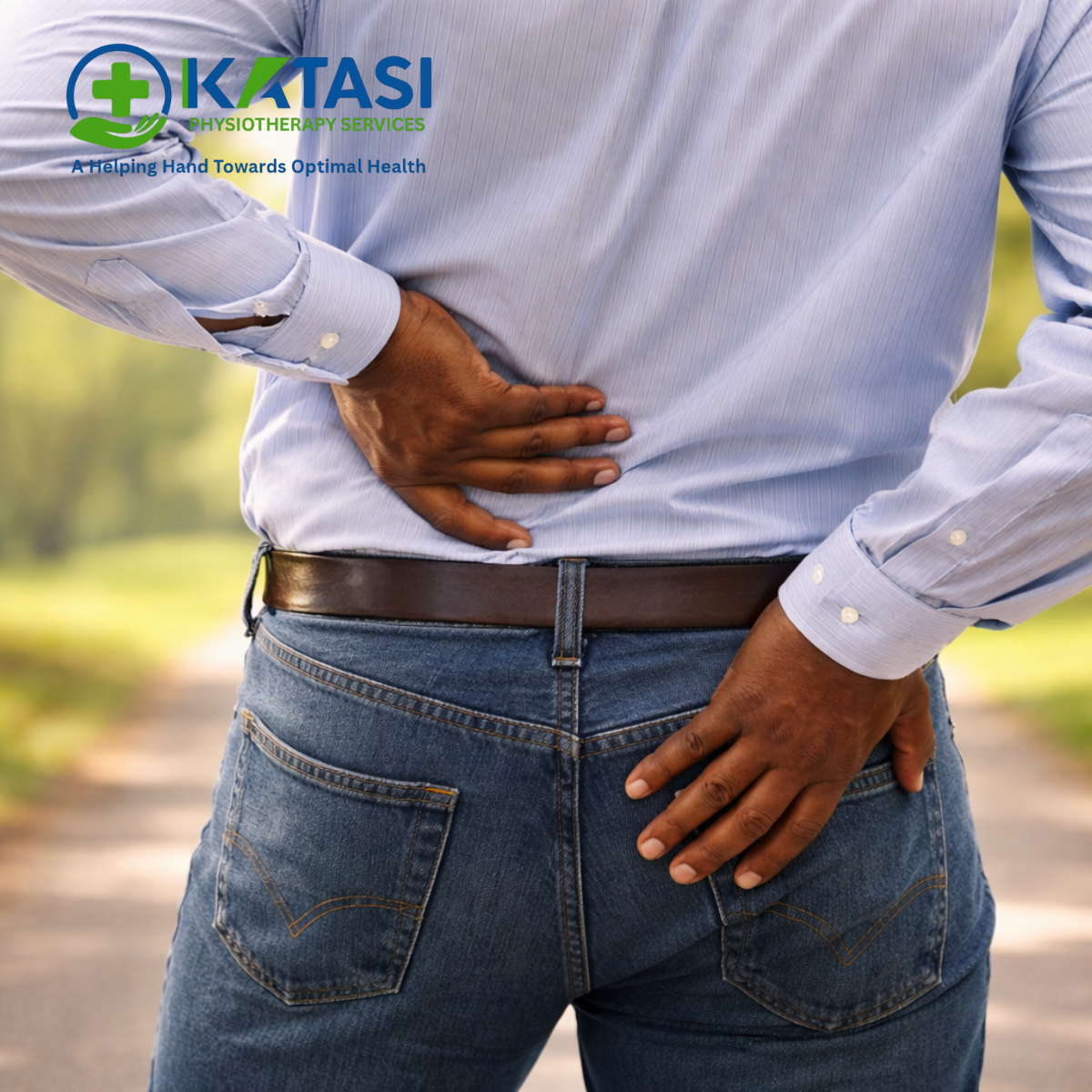
Did You Know?! The Buttocks Have Something To Do With Back & Hip Pain!
In almost every occasion out of 70% of the population suffering from muscle and joint disorders, back pain tops the list.
Most of the back pain complaints have been associated with muscle or ligament strain due to sudden awkward or heavy lifting, bulging discs (discs act as cushions between the bones of your spine), arthritis that affects the spine (spondylosis), osteoporosis( spine bones become porous and brittle) and many other causes that can lead to referred pain on your back as a result of organ dysfunction or disease.
But what if someone has not experienced the above instances that translate to their back pain? What could it be then? Before you say ‘it is just back pain’ it might be possibly because of your weak buttock muscles; the glutes.
What Are ‘Buttock Muscles’?
The buttocks clinically or anatomically they are referred to as, the glutes.
They are a group of three muscles that make up the buttock. The glutes consists of the gluteus maximus, gluteus medius and gluteus minimus, these muscles attach from top of your pelvis to your thigh bone.
And they are also responsible for hip pain, buttock pain, sciatica and pelvis alignment or support during walking.
Why Buttocks, The ‘Glutes’?
One of the root cause of pain in the back is as a result of single-to-gross muscle insufficiency. When muscle(s) do not do their job properly, other muscles will tend to compensate the role of weak ones leading to strain and in this manner the weak muscles may fail to stabilize joints causing a chain reaction of pain.
In general the back, hips and the stomach all function in unison to hold the body upright and facilitate movement: therefore a problem in one often corresponds with a problem in another area. If you have back or hip pain, it is important to identify and resolve muscle insufficiencies as a result of weak buttock muscles (glutes).
As an orthopedic physiotherapist i have had cases of back pain with associated complaints of limping, tight hamstrings, knee pain, fatigue around the hip after long standing, sitting or walking, climbing stairs and pain on the hip especially when sleeping on one side.
In this case the buttock muscles (glutes) are the root cause. It is the reason why you have low back pain, muscle spasms and even referred pain to the legs.
Why The Buttock Muscles - Causing Back & Hip Pain
The glutes are everything; they support your core and take part in stabilizing the hip during walking e.g. when you propel forward as you walk and even as you push yourself forward while climbing stairs.
When these muscles do not work the way they are supposed to, say they are weak; they would not support your pelvis in the right position or stabilize the hip while walking.
As a result, wrong muscles will be ‘activated’ and over-contract to compensate for the lack of strength of the glutes. Thus this compensation will change the walking pattern and you start limping, experiencing pain, muscle spasms and even nerve pain.
What Causes Weakness Of The Glutes/Butts?
In spite of having many causes of weak glutes such as nerve impingement from the back, muscle tightness and inflammation of your nerves; lifestyle has become the major culprit nowadays.
What brings about lifestyle is occupation; what we do. Many jobs now involve a lot of sitting all day long and even after work we go home while seated; driving or being driven. We reach home and we are seated on the couch and this repeats on and on. Little do we know that the glutes become more dormant than they should be.
Sitting as a result causes the muscles at the front of the thigh to become short and tightened, at the same time your glutes become lengthened and over-powered by tight front thigh muscles which consequently causes the fibres to weaken over time. This is also exacerbated if you sit on a wallet at the back of your pocket or with crossed legs.
The Solution
In these cases with respect to back pain you are always advised to seek consultation of a skilled and experienced orthopedic physiotherapist who will be able to do a thorough assessment and treatment and advice on proper exercises.
Final Advice
In most back pain cases many clinicians forget about this muscles, its the main reason many people are struggling to walk with back, hip and knee pain.
The earlier you look into this the better, you’ll receive uncensored advice and individualized treatments that will save you a dime.
Author
Moses Katasi - Orthopedic Physiotherapist Book an appointment
BSc, Dip, Post-graduate Diploma in Orthopedic Physiotherapy - AMREF International University, Certified Clinical Physiotherapy Instructor (CPTI) Kenya, Optimal Dry Needling Specialist (ODNS) at International Academy of Orthopedic Medicine(IAOM) - USA.