
Disc Bulge vs Herniated Disc: Causes, Symptoms & The Best Treatment (Physiotherapist Guide)
Back pain and neck pain are one of the most common problems today and one of the most misunderstood.
If you’ve ever been told you have a disc bulge or herniated disc, you might feel worried… even scared.
What you need to know is that most disc problems heal without surgery and that with the right physiotherapy you can get your back to normal faster.
What Is A Disc Bulge Or Herniated Disc
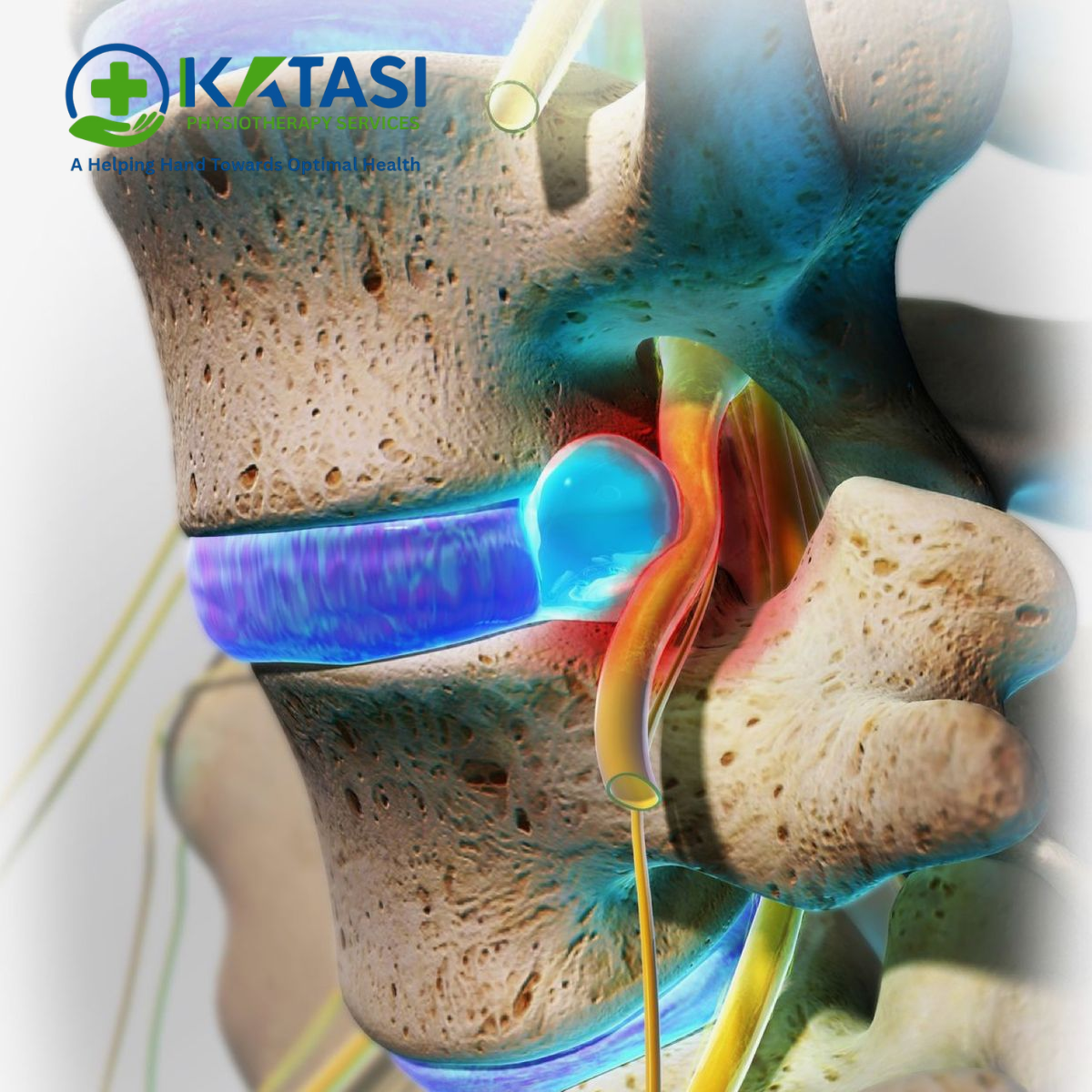
A disc is a soft cushion in between the whole bones of your spine. Each disc has a tough outer layer like a tire and a soft inner center like gel.
A disc bulge occurs when the disc is pushed outward slightly, this is not to scare you.
A herniated disc on the other hand happens when the inner gel pushes out through a tear.
So think of it like this a “bulge” is swelling, herniation is “leakage’.
Common Causes Of Disc Bulge Or Herniation
Everyone relates that this happens suddenly and when you picture it.. it looks scary but you know what this thing happens in a slow process.
Sometimes, a simple movement like bending can trigger pain but the damage has usually been building over time.
Some of the common causes include;
- Repeated bending and twisting.
- Poor posture especially sitting for long hours.
- Heavy lifting with bad technique.
- High body mass index (overweight).
Where Does It Occur?
Disc problems are common on the lower back which is more common than the neck while on the mid-back is very rare.
It’s common on the back and neck because they move more and carry more stress.
Common Disc Bulge Or Herniation Symptoms
When you have a disc bulge or herniation does not always cause symptoms but when it does the following are symptoms;
a) Pain - one may present with sharp or stinging pain or pain that radiates/travels down from the back or neck down the limbs.
b) Nerve symptoms -one can also present with numbness, tingling (“pins and needles”) and weakness in arm or leg (sciatica).
c) Warning signs -when you have loss of bladder and bowel control, severe leg weakness and difficulty in walking.
These warning signs might actually indicate severe nerve compression and need urgent medical attention.
Actually as much as it is, if a random MRI was done many people have disc problems that are asymptomatic/without any symptoms, like it doesn’t bother them.
Types Of Disc Herniation
There are three types;
- Posterolateral disc herniation- most common where the disc presses on a nerve causing leg or arm pain.
- Central disc herniation- where a disc can press on the spinal cord and can cause spinal stenosis.
- Lateral disc herniation - the disc more on the side which affects nerve at the same level.
Treatment For Disc Bulge Or Herniation
Physiotherapy is always a game changer and the 1st treatment plan, it focuses on pain relief, posture correction, therapeutic exercises, nerve mobility exercises among others.
Mostly patients who do exercises (physical activity), follow treatment plan do recover faster.
Pain relievers may help reduce inflammation but they don’t fix the root problem. Sometimes they are so much misused and they just end up masking pain.
Surgery is always the last option especially if you have the warning signs mentioned earlier that don’t resolve with physiotherapy.
It takes a few weeks or months to heal depending on personal activity level, body weight, consistency with exercises and posture habits.
Final Advice
Having diagnosed of a disc bulge or herniation is not the end of life as an orthopedic physiotherapist perspective, your spine is strong and your body can heal.
Author
Moses Katasi - Orthopedic Physiotherapist Book an appointment
BSc, Dip, Post-graduate Diploma in Orthopedic Physiotherapy - AMREF International University, Certified Clinical Physiotherapy Instructor (CPTI) Kenya, Optimal Dry Needling Specialist (ODNS) at International Academy of Orthopedic Medicine(IAOM) - USA.