Unlocking Better Sleep: How Physiotherapy Can Transform Your Sleep Apnea Management
Are you constantly battling fatigue, loud snoring, or restless nights? You might be one of the millions affected by sleep apnea, a condition where breathing repeatedly stops and starts during sleep.
As a physiotherapist, I’ve seen firsthand how this silent struggle impacts daily life, particularly for men, who are disproportionately affected.
But what if I told you that beyond traditional treatments, there’s a powerful, often overlooked ally in your journey to better sleep? That’s right; physiotherapy.
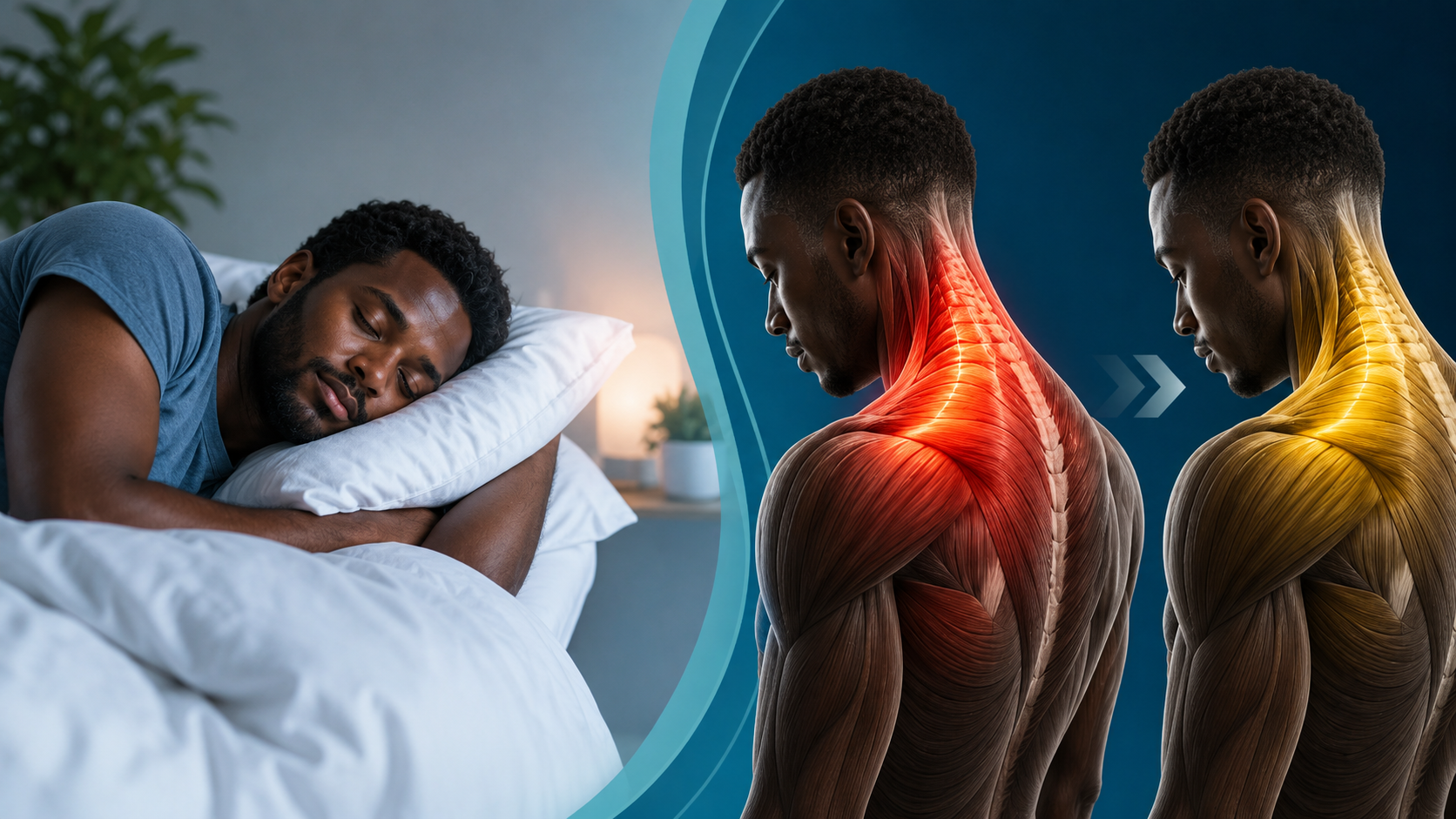
In my clinic, I’ve observed a striking pattern: many patients with sleep apnea, especially men, present with incredibly tense muscles in their neck and upper body.
It’s not just a coincidence; I believe this muscular tension is directly linked to their sleep quality and the severity of their sleep apnea.
And after incorporating targeted physiotherapy, many have experienced significant improvements.
This blog post will delve into the science behind sleep apnea, explore the crucial role of neck muscle tension, and reveal how physiotherapy, alongside other lifestyle changes, can offer a path to restful, rejuvenating sleep.
What is Sleep Apnea?
Sleep apnea is a serious sleep disorder characterized by pauses in breathing or shallow breaths during sleep.
These pauses can last from a few seconds to minutes and may occur 5 to 30 times or more an hour.
When breathing pauses, your brain and body become oxygen-deprived, leading to fragmented sleep and a host of health problems.
The most common type is Obstructive Sleep Apnea (OSA), which happens when the muscles in the back of your throat relax too much, narrowing or closing your airway as you breathe in.
This can cause loud snoring, gasping, or choking sounds.
Less common types include Central Sleep Apnea (CSA), where the brain fails to send proper signals to the muscles that control breathing, and Complex Sleep Apnea Syndrome, a combination of both.
The Silent Struggle: Why Sleep Apnea is More Common in Men
While sleep apnea can affect anyone, statistics show a clear gender disparity.
Studies indicate that sleep-disordered breathing occurs in approximately 24% of young to middle-aged men compared to 9% of women.
Some research even suggests that men are diagnosed with the condition nearly eight times more often than women, despite women also experiencing significant morbidity and mortality from OSA.
This prevalence in men is often attributed to differences in airway anatomy and fat distribution around the neck.
The Hidden Connection: Neck Muscle Tension and Sleep Apnea
This is where my clinical observations truly align with emerging research. Many of my male patients with sleep apnea exhibit significant tightness in their neck and upper body muscles.
This isn’t just discomfort; it’s a critical factor influencing their airway dynamics during sleep.
When the muscles around your neck, jaw, and throat are overly tense or dysfunctional, they can contribute to the narrowing of the upper airway.
Muscles like the sternocleidomastoid and trapezius, which are often involved in breathing, can become strained.
This postural strain can force other upper airway muscles to work harder, even when awake, potentially leading to instability during sleep.
Imagine trying to breathe through a straw while someone is gently squeezing it, that’s what a compromised airway can feel like.
This tension can exacerbate snoring and make it harder for air to flow freely, worsening the effects of sleep apnea.
The Physiotherapy Advantage: Releasing Tension, Restoring Breath
This is where physiotherapy steps in as a game-changer.
Our approach focuses on addressing the root cause of muscular tension and improving the function of the upper airway muscles.
Through techniques like myofascial release, manual therapy, and targeted exercises, we can:
- Reduce muscle stiffness and pain: By releasing tight muscles in the neck, jaw, and throat, we can alleviate discomfort and improve overall mobility .
- Improve airway patency: Relaxing these muscles can help open up the airway, making it easier to breathe during sleep and potentially reducing snoring and apneic events .
- Enhance muscle coordination: Specific oropharyngeal exercises can strengthen and tone the muscles of the throat, soft palate, and tongue, which are crucial for maintaining an open airway . Studies have shown that myo-functional therapy can significantly decrease the apnea-hypopnea index (AHI) in adults .
- Address postural imbalances: Correcting poor posture, which often contributes to neck tension, ca n further support optimal breathing mechanics.
Emerging research supports the efficacy of these interventions.
A combination of oro-facial, myo-functional therapy and myofascial release has shown potential in improving sleep quality in patients with mild OSA .
While more extensive research is ongoing, the clinical improvements I’ve witnessed in my patients are undeniable.
Beyond CPAP: A Holistic Approach
Many sleep apnea patients are prescribed Continuous Positive Airway Pressure (CPAP) machines, which are highly effective in keeping the airway open during sleep.
However, CPAP therapy primarily addresses the symptom (airway collapse) rather than the underlying muscular and postural issues.
While CPAP is a vital tool, integrating physiotherapy can offer a more holistic and potentially long-term solution, complementing the benefits of CPAP and improving patient comfort and adherence
Lifestyle Factors: Alcohol and Nutrition
Managing sleep apnea isn’t just about what happens in the clinic; it’s also about daily habits.
Two significant factors are alcohol consumption and nutrition.
-
Alcohol: Even a small amount of alcohol before bed can worsen sleep apnea. Alcohol acts as a muscle relaxant, reducing the tone of the genioglossal muscle (in the tongue) and other muscles around the throat.
This relaxation makes the airway more prone to collapse, leading to longer breathing pauses and lower oxygen levels during sleep .
Stopping or significantly reducing alcohol intake, especially in the hours before sleep, is a crucial step.
-
Nutrition: A healthy diet plays a pivotal role in overall health and can indirectly impact sleep apnea.
Obesity is a major risk factor for OSA, and weight management through balanced nutrition can significantly reduce symptoms.
Furthermore, research suggests that dietary intake of antioxidant-rich foods might help manage sleep disorders like sleep apnea .
Focusing on whole grains, lean proteins, fruits, and vegetables, while limiting processed foods and excessive red meat, can contribute to better sleep health.
Take Control of Your Sleep: Why Our Clinic Can Help
If you’re struggling with sleep apnea, loud snoring, or persistent neck and upper body tension, it’s time to explore a comprehensive approach.
As a physiotherapist, I am passionate about helping patients regain control over their sleep and overall well-being.
My unique clinical perspective, combined with evidence-based physiotherapy techniques, offers a personalized path to:
- Accurate assessment: We’ll identify specific areas of muscular tension and postural imbalances contributing to your sleep apnea.
- Targeted treatment: Through manual therapy, myofascial release, and tailored exercises, we’ll work to optimize your airway function and reduce symptoms.
- Holistic guidance: We’ll provide advice on lifestyle modifications, including posture, exercise, and referrals for nutritional support, to complement your treatment.
Don’t let sleep apnea dictate your life. You deserve restful nights and energetic days.
Visit our clinic today to discover how physiotherapy can be the missing piece in your sleep apnea management puzzle.
Let’s work together to unlock your potential for better sleep and a healthier, more vibrant life.
Author
Moses Katasi - Orthopedic Physiotherapist [Book an appointment](<Author Moses Katasi - Orthopedic Physiotherapist Book an appointment
BSc, Dip, Post-graduate Diploma in Orthopedic Physiotherapy - AMREF International University, Certified Clinical Physiotherapy Instructor (CPTI) Kenya, Optimal Dry Needling Specialist (ODNS) at International Academy of Orthopedic Medicine(IAOM) - USA.
Disclaimer:
This blog post is for informational purposes only and does not constitute medical advice. Always consult with a qualified orthopedic physiotherapist or healthcare professional for diagnosis and treatment of any medical condition.
References:
- Gender Differences in Obstructive Sleep Apnea and Treatment. Available at:https://pmc.ncbi.nlm.nih.gov/articles/PMC2642982/
- The Struggle of Women with Sleep Apnea & Why It’s Underdiagnosed. Available at:https://www.tmjtexas.com/women-with-sleep-apnea
- The gender gap in obstructive sleep apnea. Available at:https://academic.oup.com/sleep/article/48/7/zsaf068/8116540?login=false
- Myofascial trigger points therapy increases neck mobility and… Available at:https://pubmed.ncbi.nlm.nih.gov/39893364/
- Efficacy of orofacial myofunctional therapy combined with myofascial release in patients with mild obstructive sleep apnoea. Available at:https://onlinelibrary.wiley.com/doi/full/10.1111/joor.13456
- Effects of respiratory muscle therapy on obstructive sleep apnea: a systematic review and meta-analysis. Available at:https://link.springer.com/article/10.5664/jcsm.8318
- Myofunctional Therapy to Treat Obstructive Sleep Apnea. Available at:https://pmc.ncbi.nlm.nih.gov/articles/PMC4402674/
- Treating Sleep Apnea With Orofacial Myofunctional Therapy. Available at:https://tonguetieindia.com/blog/treating-sleep-apnea-with-orofacial-myofunctional-therapy/
- Efficacy of myofunctional therapy for obstructive sleep apnea. Available at:https://www.sciencedirect.com/science/article/pii/S1532338225000521
- Efficacy of orofacial myofunctional therapy combined with myofascial release in patients with mild obstructive sleep apnoea: a randomized controlled trial. Available at:https://pubmed.ncbi.nlm.nih.gov/37010143/
- CPAP Therapy Effects on Neck and Shoulder Muscles in OSA Patients. Available at:http://www.jmatonline.com/PDF/S137-S141-PB-101-S7.pdf
- Alcohol and the risk of sleep apnoea: a systematic review and meta… Available at:https://pmc.ncbi.nlm.nih.gov/articles/PMC5840512/
- The Link Between Alcohol and Sleep Apnea - Sleep Foundation. Available at:https://www.sleepfoundation.org/sleep-apnea/alcohol-and-sleep-apnea
- Nutrition Impacts Sleep Apnea Symptoms | CSAT Meridian. Available at:https://www.sleepidaho.com/nutrition-impacts-sleep-apnea-symptoms
- The Role of Antioxidant-Rich Diets in Supporting Sleep Apnea… Available at:https://www.thesnoozedoc.com/blog/the-role-of-antioxidant-rich-diets-in-supporting-sleep-apnea-treatment“