
Shoulder Impingement: The Complete Guide From Our Orthopedic Physiotherapist
Understanding Shoulder Impingement
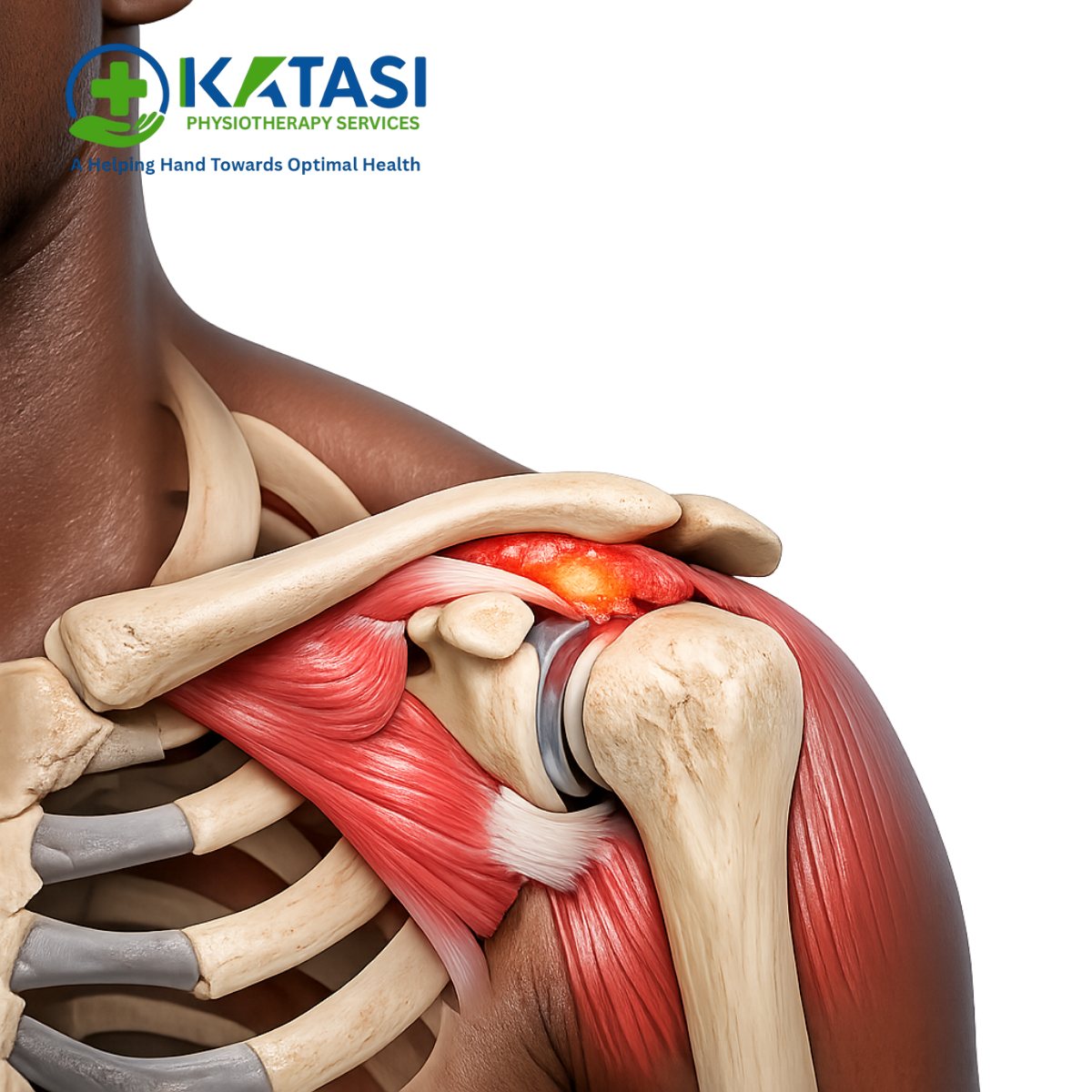
Shoulder impingement happens when the tendon of muscles in the shoulder (rotator cuff tendons) get compressed (or “impinged”) and fluid filled sac between bones (the bursa) get compressed between the acromion (the top bone of the shoulder blade) and the arm bone (humerus).
This compression leads to pain, stiffness, and reduced movement, especially when lifting the arm overhead. Unlike general shoulder pain, impingement is mechanical; it happens because the shoulder structures are not moving smoothly together/the structures are trapped in the joint.
Think of it like this:
-Your shoulder is a tight tunnel.
-Tendons pass through that tunnel.
-If space reduces → tissues get pinched → pain begins.
Over time, this can lead to:
-Inflammation.
-Tendon damage.
-Weakness.
-Reduced movement.
Which limits the ability to perform daily tasks or shoulder movement because of pain.
Common Symptoms Patients Experience
As an orthopedic physiotherapist, patients often describe:
- Pain when lifting the arm - particularly between 60–120° (painful arc).
- Pain at night - often disturbing sleep, especially when lying on the affected side.
- Weakness - difficulty lifting objects, throwing, or reaching overhead.
- Reduced range of motion - stiffness in the shoulder joint.
- Clicking or catching sensation - a sign of the tendon rubbing under the acromion.
Causes of Shoulder Impingement
This condition is rarely caused by just one thing. It’s usually a combination:
1. Poor Posture
-Rounded shoulders.
-Forward head position.
-Common in desk workers.
2. Muscle Imbalance in Strength
-Weak shoulder stabilizing muscles (rotator cuff).
-Tight chest muscles.
-Overactive upper back muscles (upper trapezius).
3. Repetitive Overhead Activities
-Gym training.
-Manual labor.
-Sports like swimming, tennis, or throwing.
4. Shoulder Mechanics Dysfunction
-Poor movement patterns.
-Lack of coordination in shoulder muscles.
5. Age Related Changes
-Tendons naturally lose resilience over time.
Shoulder Impingement Stages
Understanding the stage helps guide treatment this include;
Stage 1: Inflammation
This stage is reversible and there is pain after activity.
Stage 2. Irritation
There’s more persistent pain and reduced function.
Stage 3. Structural Damage
Possible rotator cuff tear with significant weakness.
How Shoulder Pain Affects Your Life
Many people often underestimate how much this condition affects them and these is how it can affect your:
- Struggling to wear clothes.
- Difficulty reaching shelves.
- Pain while driving.
- Avoiding exercise.
- Poor sleep → fatigue → reduced productivity.
This is not “just shoulder pain”—it impacts quality of life.
Diagnosis: How Our Physiotherapist Identifies It
As physiotherapist it is absolutely possible to diagnose this condition through a proper assessment which includes;
-Movement analysis.
-Strength testing.
-Special orthopedic tests.
-Postural evaluation.
Imaging (like MRI or ultrasound) is sometimes used, but not always necessary.
Why Choose Our Physiotherapy Approach?
We don’t just treat symptoms, we fix the root cause.
✔ Accurate Diagnosis
We assess your movement, posture, and muscle function to identify exactly what’s causing your pain.
✔ Personalized Treatment Plan
No generic exercises. Your rehab is tailored specifically to your condition.
✔ Proven Recovery Methods
We use evidence-based physiotherapy techniques to:
- Reduce pain.
- Restore mobility.
- Rebuild strength.
- Prevent recurrence.
Frequently Asked Questions
1. Can shoulder impingement heal on its own?
Sometimes mild cases improve, but most require guided physiotherapy to fully recover.
2. Should I exercise with shoulder pain?
Yes, but only the right/targeted exercises as advised by a physiotherapist. Incorrect movements can worsen the condition.
3. Do I need surgery?
Most cases do not require surgery when treated early with physiotherapy.
Final Advice
Shoulder impingement is one of the most common and most misunderstood shoulder conditions.
The key message is simple:
*Pain is not the problem - the way your shoulder moves is.*
Fix the movement, strengthen the right muscles, and respect your body’s limits as far as gym exercises are concerned and your shoulder can recover fully through proper physiotherapy.
Author
Moses Katasi - Orthopedic Physiotherapist Book an appointment
BSc, Dip, Post-graduate Diploma in Orthopedic Physiotherapy - AMREF International University, Certified Clinical Physiotherapy Instructor (CPTI) Kenya, Optimal Dry Needling Specialist (ODNS) at International Academy of Orthopedic Medicine(IAOM) - USA.