
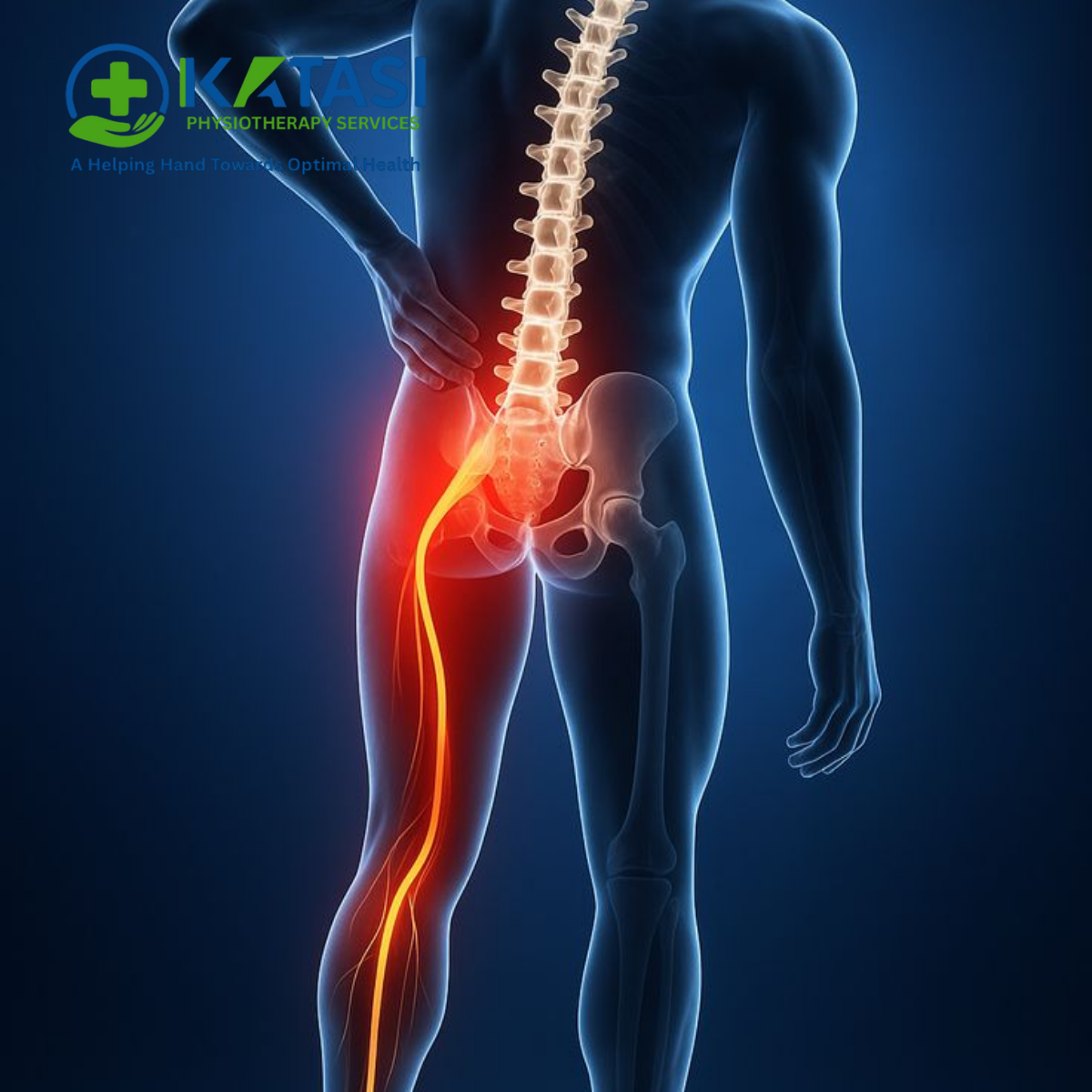
Sciatica: Causes, Symptoms, and Treatment
What is Sciatica?
Sciatica is basically a symptom or a condition that causes pain that starts in the lower back or buttock and travels down one leg. It occurs when the sciatic nerve becomes irritated or compressed.
Sciatica is a nerve pain that is directly associated with back pain. This type of pain is not just an ordinary back pain. Sciatica is nerve-related and often feels sharp, burning, or like an electric shock moving down the leg.
What Causes Sciatica
Sciatica develops when pressure is placed on the nerve in the lower spine. The most common causes include:
1. Herniated/Bulged Disc
A disc in your spine can bulge or slip out of place, pressing on the nerve and causing pain down the leg. This is the most common cause of sciatica.
Stenosis is basically narrowing, meaning the back(lumbar) there is narrowing of space where the spine is housed. Occurs more common as you age, this is when the space in the spine narrows, compressing nearby nerves.
3. Piriformis Syndrome
A tight muscle in the buttock (piriformis) can irritate the sciatic nerve, especially in people who sit for long periods. This muscle; piriformis is where the nerve passes under it while a small percentage of individuals have the sciatic nerve pass inside the muscle.
4. Degenerative Changes (Lumbar Spondylosis)
Natural wear and tear in the spine can reduce support and lead to nerve irritation over time.
Common Sciatica Symptoms
- Pain from the lower back, buttock up to the knee or past the knee to the leg and toes.
- Sharp, burning, or shooting pain.
- Tingling or “pins and needles”.
- Numbness in the leg or foot.
- Weakness in the affected leg.
What Makes Sciatica Worse
Sciatica pain tends to increase with movements that stress the lower spine, such as:
- Sitting for long hours.
- Bending forward (e.g., tying shoes).
- Twisting suddenly.
- Coughing or sneezing.
- Lifting heavy objects improperly.
These actions increase pressure on the nerve, triggering or worsening symptoms.
How Is Sciatica Diagnosed
Sciatica can be diagnosed by a physiotherapist or a doctor through;
a) Clinical Assessment
Which includes;
- Understanding your symptoms.
- Checking how the pain travels through physical assessment.
- Testing movement, strength, and nerve function.
b) Scans
Scans like MRI are usually only needed if:
- Symptoms are severe.
- Pain persists.
- There are neurological deficits (e.g., weakness).
Effective Treatment for Sciatica
Most cases of sciatica improve with non-surgical treatment, especially when addressed early.
1. Physiotherapy (Most Effective Approach)
A physiotherapist focuses on:
-Reducing nerve compression.
-Improving spinal mobility.
-Strengthening core and back muscles.
-Correcting posture and movement habits.
2. Pain Relief Strategies
-Anti-inflammatory medication (when necessary).
-Heat or ice application.
3. Stay Active
-Complete bed rest is not recommended. Gentle movement helps recovery.
4. Targeted Exercises
-Specific exercises can relieve pressure on the nerve and prevent recurrence.
When Should You Seek Medical Help?
Consult a professional if you experience:
-Persistent or worsening pain.
-Difficulty walking or standing.
-Increasing leg weakness.
-Numbness that does not improve.
How to Prevent Sciatica
-Maintain proper posture (especially when sitting).
-Avoid prolonged sitting.
-Strengthen your core muscles.
-Stay physically active.
-Practice safe lifting techniques.
Final Advice
Sciatica is a treatable nerve condition, not just back pain. Understanding the cause and starting the right treatment early especially physiotherapy can significantly speed up recovery and prevent long-term problems.
Author
Moses Katasi - Orthopedic Physiotherapist Book an appointment
BSc, Dip, Post-graduate Diploma in Orthopedic Physiotherapy - AMREF International University, Certified Clinical Physiotherapy Instructor (CPTI) Kenya, Optimal Dry Needling Specialist (ODNS) at International Academy of Orthopedic Medicine(IAOM) - USA.