Neck Pain from Office Work? Ergonomics & Physiotherapy in Westlands
Neck Pain from Office Work: Simple Ergonomic Changes That Can Help
Practical advice for desk workers in Nairobi and Westlands
Long hours at a computer, frequent phone use and limited movement can leave your neck feeling stiff, heavy or painful. Many office workers in Nairobi spend most of the day in one position, then continue looking down at a phone during breaks or while commuting. Over time, this can increase strain on the neck, shoulders and upper back.
Poor posture is not always the only cause of neck pain. Stress, lack of sleep, previous injury, reduced strength, limited movement and staying in one position for too long can also contribute. The aim is not to sit perfectly all day. It is to create a workstation that supports you and gives your body regular opportunities to move.
Quick workstation changes to try
A few practical adjustments can make your desk more comfortable:
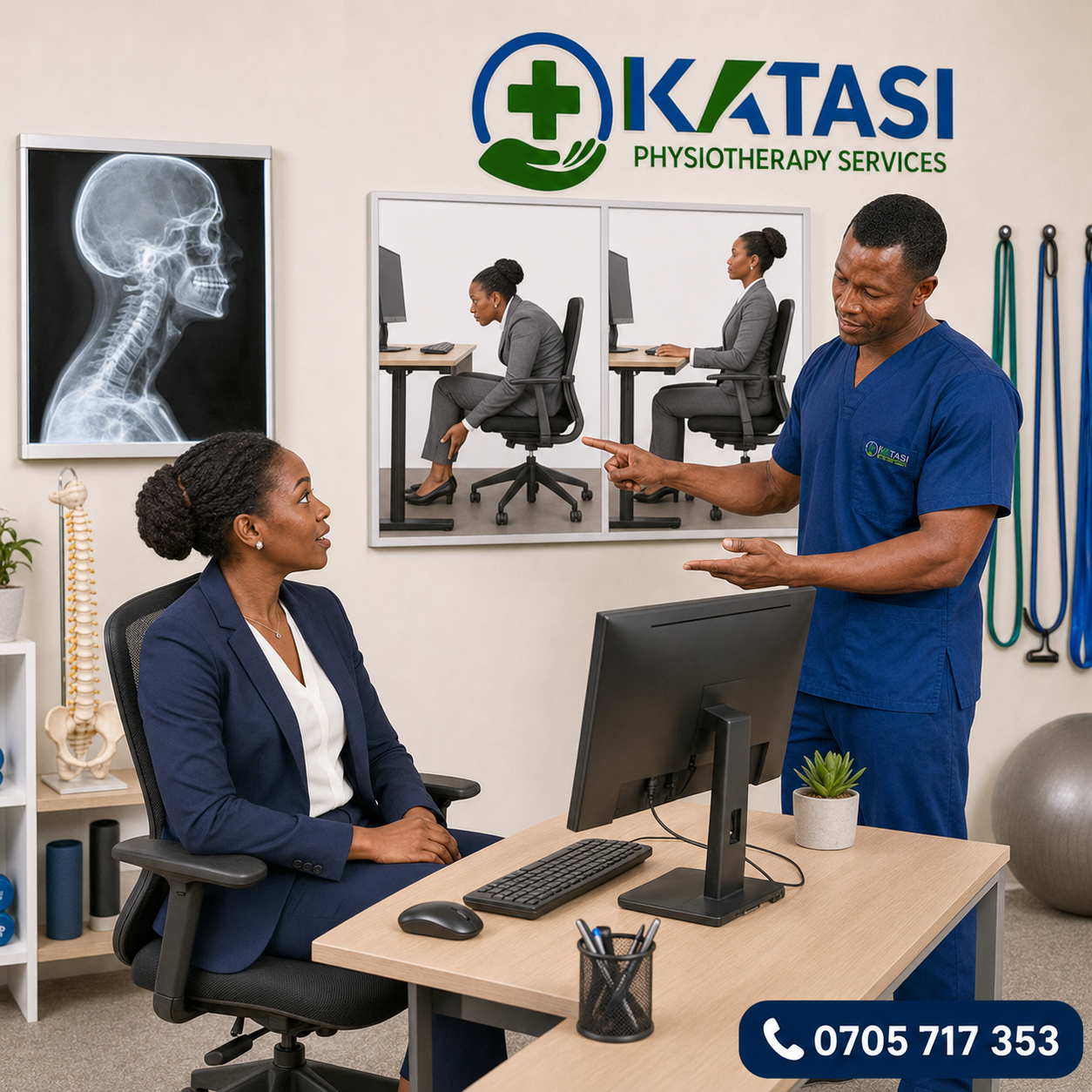
- Place your monitor directly in front of you, rather than to one side.•Keep the top of the screen at or slightly below eye level.
- Position the screen at a comfortable viewing distance instead of leaning forward.
- Keep your shoulders relaxed and your head balanced over your torso.
- Place your keyboard and mouse close enough to avoid reaching.
- Support your feet and adjust your chair so your hips and knees are comfortable.
- Reduce glare so you do not lean or twist to see the screen clearly. Your workstation should be adjusted to your body, not the other way around.
If you use a laptop for long periods, consider a separate keyboard and mouse with the screen raised to a more comfortable height.
Movement matters as much as posture
Even a well-designed workstation cannot replace movement. Try changing position regularly, standing during a phone call, walking briefly between tasks and gently moving your neck and shoulders within a comfortable range.
Avoid forcing painful stretches or holding your neck in one position for hours. Small, regular movement breaks are often more realistic and useful than waiting until the end of the day to exercise.
When should you see a physiotherapist?
Consider professional assessment if neck pain keeps returning, affects your sleep, causes headaches, limits your work or exercise, or spreads into your shoulder or arm.
Tingling, numbness or weakness may indicate irritation involving a nerve and should be assessed rather than managed only by changing your chair.
At Katasi Physiotherapy Services in Westlands, Nairobi, your physiotherapist can assess your neck and upper-back movement, posture, muscle strength, work setup, daily habits and activity goals.
Your plan may include targeted exercises, mobility work, posture and workplace correction, hands-on treatment, strengthening and advice for managing work demands.
The goal is not to blame your desk or chase a “perfect posture.” It is to help you move more comfortably, build capacity and make practical changes that fit your working day.
When neck pain needs prompt medical attention
Seek prompt medical assessment after significant trauma, or if neck pain is accompanied by progressive weakness or numbness, loss of coordination, severe headache with fever, difficulty speaking, chest pain, fainting or other sudden neurological symptoms.
Book a physiotherapy session in Westlands
If desk-related neck pain is affecting your work, sleep or daily life, book an assessment with Katasi Physiotherapy Services, located on Mogotio Road off Muthithi Road, Westlands, Nairobi.
Call or WhatsApp:** 0705 717 353**
Frequently asked question
Can physiotherapy help neck pain caused by office work?
Physiotherapy may help by identifying the factors contributing to your symptoms and building a personalized plan involving movement, strength, mobility, ergonomic changes and activity advice. The most suitable treatment depends on your assessment and health history.
Author
Moses Katasi - Orthopedic Physiotherapist Book an appointment
BSc, Dip, Post-graduate Diploma in Orthopedic Physiotherapy - AMREF International University, Certified Clinical Physiotherapy Instructor (CPTI) Kenya, Optimal Dry Needling Specialist (ODNS) at International Academy of Orthopedic Medicine(IAOM) - USA.
Disclaimer:
This blog post is for informational purposes only and does not constitute medical advice. Always consult with a qualified orthopedic physiotherapist or healthcare professional for diagnosis and treatment of any medical condition.