
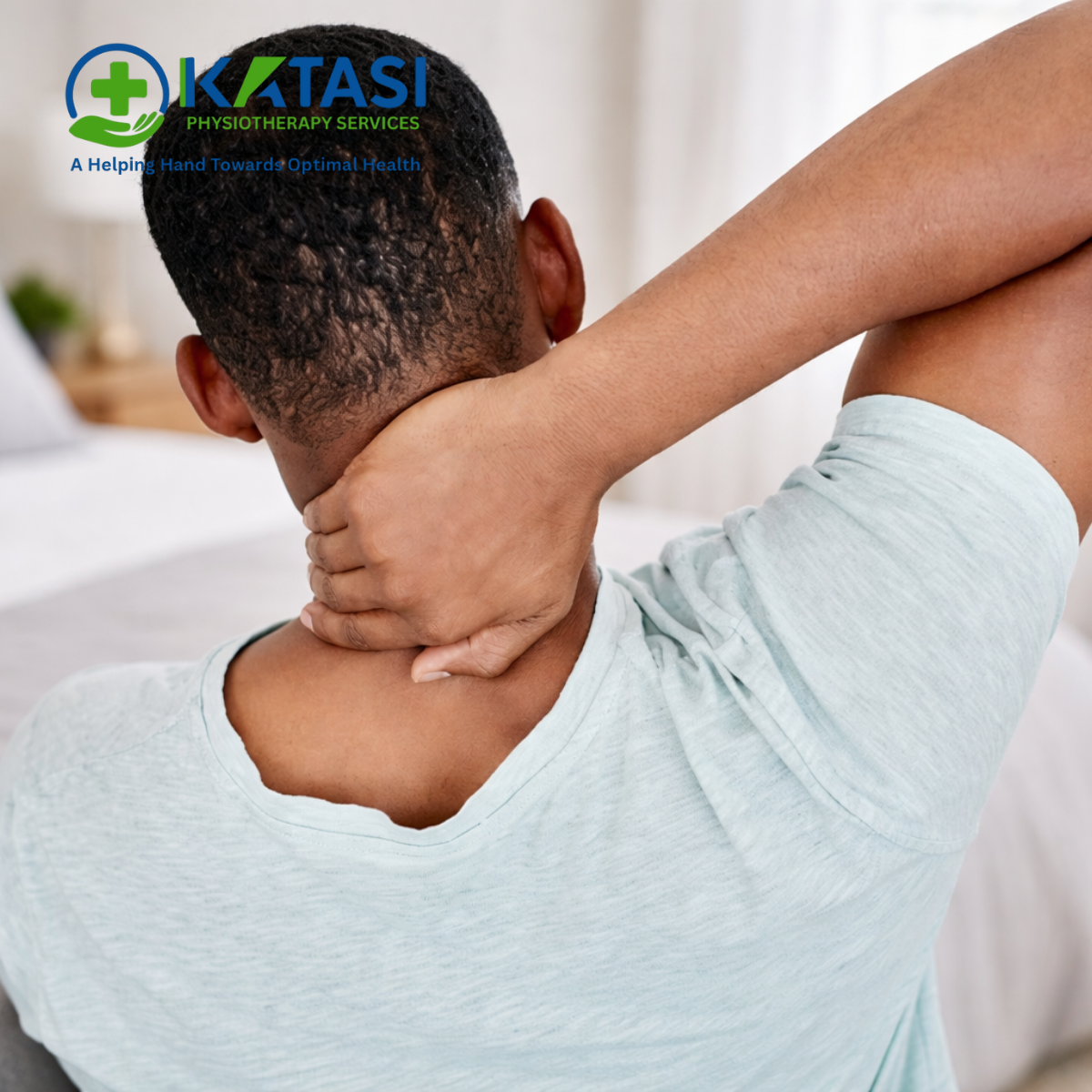
Why Does My Neck Hurt When I Wake Up?
Common Causes of Morning Neck Pain & Solution to Fix It
Waking up with neck pain or stiffness is a very common problem. Many people notice that their neck feels tight, sore, or difficult to turn when they first get out of bed.
In most cases, morning neck pain is caused by poor sleeping posture, inadequate pillow support, or muscle strain during the night. Fortunately, these issues are usually temporary and can improve with small adjustments to your sleep habits and daily posture.
As an orthopedic physiotherapist, this is one of the most common complaints patients report, and it is often easy to correct once the cause is identified.
1. Poor Sleeping Position
Your sleeping posture plays a major role in how your neck feels in the morning.
Sleeping on Your Stomach
Sleeping face down forces your neck to stay rotated to one side for several hours. This position places continuous strain on the neck joints and muscles, which often leads to stiffness or pain when you wake up.
Awkward Neck Positions
Falling asleep on a couch, sitting upright, or sleeping with your neck bent can cause muscle strain or spasms overnight.
2. Pillow Problems
Your pillow should support the natural curve of your neck (cervical spine).
Pillow Too High
A high pillow pushes your head forward, creating excessive pressure on the neck muscles.
Pillow Too Flat
A very flat pillow allows the neck to collapse downward, overstretching ligaments and muscles.
Old or Soft Pillows
Worn-out pillows lose their structure and fail to support the neck properly, leading to poor alignment.
3. Mattress Support Issues
A sagging or overly soft mattress can cause the spine to sink unevenly. When the spine is misaligned, the neck muscles must work harder during sleep, resulting in morning stiffness or soreness.
4. Daytime Posture (Text/tech Neck)
Modern lifestyle habits contribute heavily to neck pain.
Looking down at a phone, laptop, or tablet for long periods causes forward head posture, often referred to as “text/tech neck.”
This places extra stress on the neck muscles during the day, making them more prone to stiffness overnight.
5. Stress and Muscle tension
Stress can cause unconscious tightening of the neck and shoulder muscles, especially during sleep. This prolonged tension may lead to morning neck stiffness or headaches.
6. Sudden Movement During Sleep
Tossing, turning, or sudden jerking movements during sleep can strain small neck muscles or ligaments, leading to pain when you wake up.
How to Prevent Neck Pain While Sleeping
Sleep on Your Back or Side
These positions help maintain neutral spinal alignment and reduce stress on the neck.
Avoid stomach sleeping whenever possible.
Use the Right Pillow
A cervical or memory foam pillow supports the natural curve of the neck and helps keep your head aligned with the spine.
Support your Spine
Small positioning adjustments can improve sleep posture for instance if you’re;
Back sleeper: place a pillow under your knees
Side sleeper: place a pillow between your knees
This helps maintain proper spinal alignment throughout the night.
When to See a Physiotherapist or Doctor
Seek medical evaluation if your neck pain:
- Lasts longer than one week.
- Causes numbness, tingling, or weakness in the arms or hands.
- Makes it difficult to turn your head.
- Occurs with fever, severe headache, or nausea.
In most cases persistent symptoms may indicate conditions such as nerve irritation, cervical joint dysfunction, or disc problems.
Our orthopedic physiotherapist can assess your neck mobility, posture, and muscle function to provide targeted treatment and exercises.
Final Advice
Most cases of neck pain after sleeping are related to sleep posture, pillow support, or daytime neck strain. Making simple adjustments to your sleeping environment and posture can significantly reduce morning stiffness.
If neck pain continues or becomes frequent, our orthopedic physiotherapist can help identify and treat the underlying cause that causes pain and restore normal neck movement.
Author
Moses Katasi - Orthopedic Physiotherapist Book an appointment
BSc, Dip, Post-graduate Diploma in Orthopedic Physiotherapy - AMREF International University, Certified Clinical Physiotherapy Instructor (CPTI) Kenya, Optimal Dry Needling Specialist (ODNS) at International Academy of Orthopedic Medicine(IAOM) - USA.