From the Pitch at Camp Toyoyo to the Trails of Ngong Hills: Don't Let a Meniscus Tear Keep You on the Sidelines of Nairobi Life.
Ever Wondered What Your Knee’s Meniscus Actually Does?
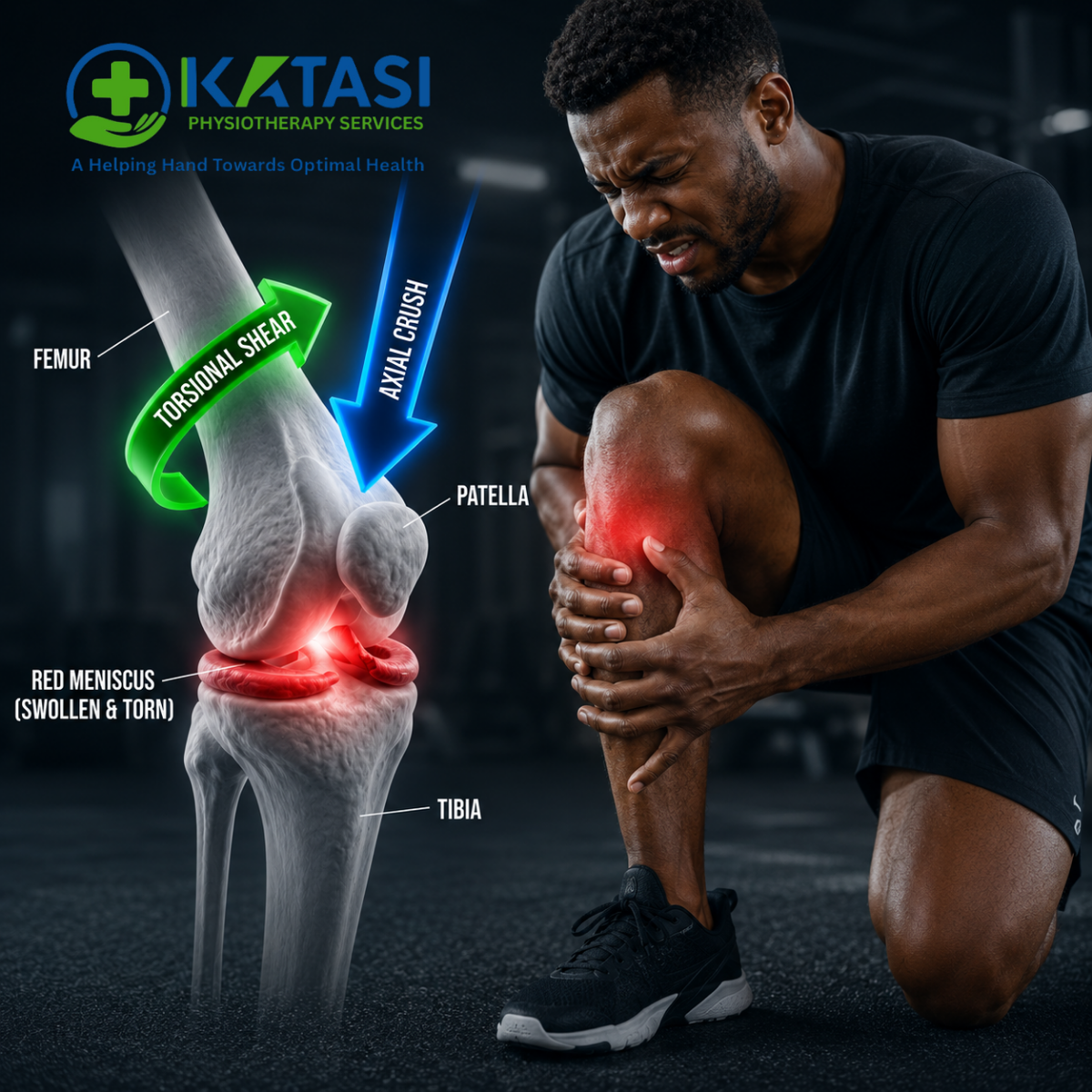
Imagine your knee as a finely tuned machine. Inside, you have these two C-shaped cushions, called menisci (plural for meniscus).
Think of them as your knee’s natural shock absorbers, helping to spread the load, keep things stable, and ensure smooth movement.
When one of these gets injured, it’s what we commonly call a torn meniscus, and it can bring a lot of pain, swelling, and make moving your knee a real challenge.
Whether you’re an active Nairobi resident, a dedicated athlete, or just someone living your daily life, understanding what’s going on with your meniscus is the first crucial step towards feeling better.
So, What Kind of Meniscus Tear Do We Have? Let’s Break Down the Grades
When you get an MRI, your doctor might talk about different grades of meniscus tears. It can sound a bit technical, but let me simplify it for you.
These grades are basically how we classify the severity of the tear, usually seen on an MRI scan.
-
Grade 1: The Minor Niggle. This is like a small bruise inside your meniscus. On an MRI, we see a tiny area of internal damage, but it hasn’t actually broken through the surface of the cartilage. Often, you might not even feel it, or it could just be a mild, nagging discomfort.
-
Grade 2: The Deeper Strain. Here, the damage is a bit more significant. We see a linear area of injury within the meniscus, but it’s still considered an “incomplete” tear because it hasn’t fully separated. You’ll likely feel more noticeable pain with this one, and you might experience some occasional catching in your knee.
-
Grade 3: The Full Tear. This is what we call a “true” tear.
The damage has gone all the way through to the surface of the meniscus. This is usually when things get really uncomfortable, significant pain, swelling, and sometimes your knee might even lock up or feel like it’s giving way.
Grade 3 tears can come in different shapes and sizes (like longitudinal, radial, or even a “bucket-handle” tear), and the specific type helps us decide the best way forward for your treatment.
How Did This Happen? Common Knee Injury Scenarios in Our Nairobi Lives
It’s easy to think knee injuries only happen to professional athletes, but the truth is, a meniscus tear can affect anyone.
Living in a dynamic city like Nairobi, with its mix of active lifestyles and everyday hustle, we see these injuries pop up in various ways:
-
On the Pitch or Court: If you’re passionate about football, whether it’s a friendly match at Camp Toyoyo or a more competitive league, or if rugby and basketball are your game, sudden twists, pivots, and quick changes in direction are common culprits.
Even a rigorous gym session or a misstep during your morning run can put unexpected stress on your knee.
-
Exploring Our Beautiful Outdoors: Kenya offers incredible opportunities for hiking, from the scenic Ngong Hills to the challenging trails of Mt. Longonot or even a leisurely walk through Karura Forest.
But uneven terrain, a sudden slip, or an awkward landing can cause your knee to twist in just the wrong way, leading to a meniscus tear.
-
The Daily Grind in Nairobi: Sometimes, it’s the simplest things.
A slip on a wet pavement during our rainy season, stepping into an unseen pothole while navigating the CBD, or even an unexpected jolt or twist getting in or out of a matatu, these everyday moments can unfortunately lead to a meniscus injury.
Your Recovery Journey: The Katasi Physiotherapy Difference in Westlands
At Katasi Physiotherapy in Westlands, Nairobi, we don’t just look at your MRI scan; we look at you.
Our philosophy is all about getting you back to moving without pain, restoring your strength, and rebuilding your confidence.
This means your treatment plan isn’t generic; it’s meticulously tailored to your specific injury, your lifestyle, and your personal recovery goals.
Here’s a glimpse into how we typically guide you through your meniscus injury recovery:
-
Phase 1: Calming Things Down & Protecting Your Knee. When you first come to us, especially if you’re in pain and swollen, our priority is to settle things down.
We’ll use strategies like modified RICE (Rest, Ice, Compression, Elevation), gentle hands-on techniques to ease stiffness, and other modalities to reduce inflammation.
Think of it as creating the perfect environment for your knee to start healing.
-
Phase 2: Getting Your Movement Back & Gentle Strengthening. As the pain starts to subside, we’ll gradually introduce exercises to help you regain your full knee movement.
This includes carefully guided stretches and early strengthening exercises, like simple quadriceps contractions and straight leg raises.
We ensure every step is controlled and safe, building a solid foundation.
-
Phase 3: Building Strength & Stability for Everyday Life. This is where we really start to rebuild your knee’s resilience.
We’ll progress to more functional movements, think squats, lunges, and step-ups. Crucially, we’ll also incorporate proprioception (your body’s awareness of its position in space) training using tools like balance boards.
This re-educates your knee, making it smarter and more stable, which is key to preventing future injuries.
-
Phase 4: Back to What You Love, Stronger Than Before! For those of you eager to get back to sports or demanding activities, this final phase is all about preparing your knee for those specific challenges.
We’ll work on sport-specific drills, agility training, and plyometrics.
Our goal is to ensure your knee is not just recovered, but stronger and more resilient than before, so you can return to your passions with confidence.
Don’t Let a Meniscus Injury Keep You on the Sidelines. Let’s Get You Moving Again!
A meniscus injury can feel like a huge setback, but it doesn’t have to define your life.
With the right diagnosis, a personalized, evidence-based physiotherapy program, and the unwavering support of the Katasi Physiotherapy team, you can absolutely regain full function, significantly reduce your pain, and confidently get back to doing all the things you love.
Don’t wait, reach out to us today and let’s start your journey back to a pain-free, active life.
Author
Moses Katasi - Orthopedic Physiotherapist Book an appointment
BSc, Dip, Post-graduate Diploma in Orthopedic Physiotherapy - AMREF International University, Certified Clinical Physiotherapy Instructor (CPTI) Kenya, Optimal Dry Needling Specialist (ODNS) at International Academy of Orthopedic Medicine(IAOM) - USA.
Disclaimer:
This blog post is for informational purposes only and does not constitute medical advice. Always consult with a qualified orthopedic physiotherapist or healthcare professional for diagnosis and treatment of any medical condition.