
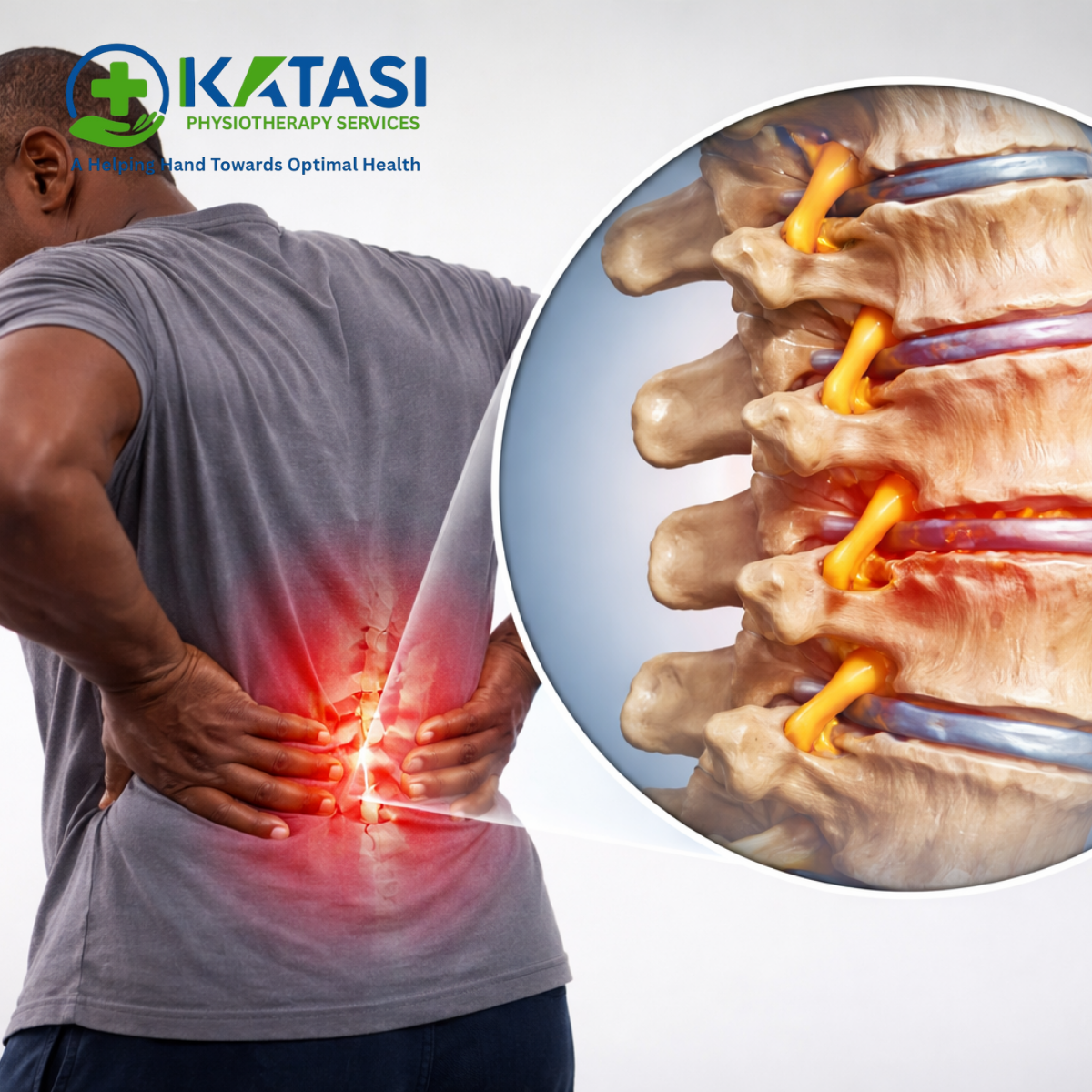
Lumbar Spondylosis; Causes, Symptoms, Treatment
After suffering back pain for a while or a short time the pain won’t go away? Stiffness when you wake up? Pain when standing, walking, or bending? And when an X-ray is done results show you have lumbar spondylosis. Are you contented with the treatment or explanation what lumbar spondylosis is?
Here is the truth about lumbar spondylosis that maybe you’re not told;
- Lumbar spondylosis is very common and not always dangerous.
- Many people have it without any pain at all.
- And in most cases, it can be managed effectively without surgery, only through physiotherapy.
As an orthopedic physiotherapist, let’s break it down in a way that actually makes sense and helps you feel in control and confident again.
What is Lumbar Spondylosis?
Lumbar is the lower back and spondylosis is age related wear and tear (arthritis) or basically degeneration of bones and discs of the lower spine, the lower back. Well, don’t be afraid when i say its arthritis..
Think of your spine like a car:
- The discs are shock absorbers.
- The joints allow movement.
- The bones provide support.
Over time, these structures naturally wear down due to:
- Daily activities.
- Repetitive movements.
- Poor posture.
- Previous injuries.
These can lead to wear and tear that is referred as spondylosis which can occur on the neck or lower back.
Don’t Panic!!
Many people are in distress because of “lumbar spondylosis” or when they are told they have arthritis of the spine.. well its not the end of life. What appears on the scans, actually doesn’t equal to pain you feel and vise versa.
Research shows many people in their 40s–60s have spine changes without symptoms, even young adults can show early disc wear without pain.
So if your report says:
- “disc degeneration”
- “spondylosis”
- “osteophytes”
It does not automatically mean something is seriously wrong, but also its impact in severe cases can be limiting as physiotherapists we treat how the body/compensates from symptoms adapts and not the scans but we treat, you.
What Causes Pain
Pain usually happens when these changes start affecting nearby structures:
1. Joint Irritation
Small joints in your spine become stiff and inflamed causes localized lower back pain.
2. Disc Changes
Spondylosis causes reduced cushioning of the discs, increased pressure, aching and stiffness.
3. Nerve Irritation
If structures narrow around where nerves are, this symptoms occur;
- Pain going to the buttock or leg.
- Numbness or tingling.
- Burning sensation.
What Most People Experience
You’re fine in your 30s…
Then gradually you start;
- Feeling morning stiffness.
- Sitting too long causes discomfort.
- Standing or walking for long becomes painful.
- Bending feels restricted.
When you go for a scan → “lumbar spondylosis”
Sometimes many people are anxious and worried.
Common Symptoms of Lumbar Spondylosis
- Lower back pain (dull or sharp).
- Morning stiffness.
- Pain after prolonged sitting.
- Reduced flexibility.
- Pain when standing or walking long.
- Occasional leg pain or heaviness.
Treatment Backed By Physiotherapy
1. Movement is Medicine
Targeted exercises help reduce stiffness, enhance flexibility and strengthen muscles.
2. Strengthen Abdominal Muscles
Strong muscles reduce load on the spine.
3. Posture Correction
Simple changes make a big difference like sitting upright, avoid slouching and adjust your work station.
4. Manual Therapy
Through physiotherapy various treatment approaches and techniques are used.
5. Education
Understanding your condition reduces fear and pain reduces too.
Final Advice
Lumbar spondylosis is common, its manageable, its not a life sentence.
The key is early physiotherapy, movement and right guidance.
Author
Moses Katasi - Orthopedic Physiotherapist Book an appointment
BSc, Dip, Post-graduate Diploma in Orthopedic Physiotherapy - AMREF International University, Certified Clinical Physiotherapy Instructor (CPTI) Kenya, Optimal Dry Needling Specialist (ODNS) at International Academy of Orthopedic Medicine(IAOM) - USA.