
Lumbar Spinal Stenosis: Causes, Symptoms, and the Best Treatment Options (Orthopedic Physiotherapist Guide)
What Is Lumbar Spinal Stenosis(LSS)?
Lumbar spinal stenosis (LSS) is a condition where the spaces in your lower spine become narrowed, putting pressure on the nerves that travel through the spine into your legs.
This narrowing can happen in the central spinal canal, on the sides of the spinal canal (lateral recess stenosis) or nerve exit opening (foramina).
As an orthopedic physiotherapist, one of the most important things patients need to understand is this:
- Not everyone with spinal narrowing has symptoms.
- It only becomes spinal stenosis when it causes pain or functional limitation.
Why Does Lumbar Stenosis Happen?
The most common cause is age-related degeneration. Over time, your spine undergoes wear and tear (Lumbar Spondylosis) this changes gradually reduce space for the nerves.
Risk Factors
- Age above 60 years.
- Long-standing back pain problems.
- Previous spinal injury.
- Sedentary lifestyle.
- Poor posture habits.
Symptoms Of Lumbar Stenosis
Lumbar spinal stenosis has a very characteristic symptom pattern that distinguishes it from other back pain conditions. Some of the symptoms include;
1. Leg Pain When Walking (Neurogenic Claudication)
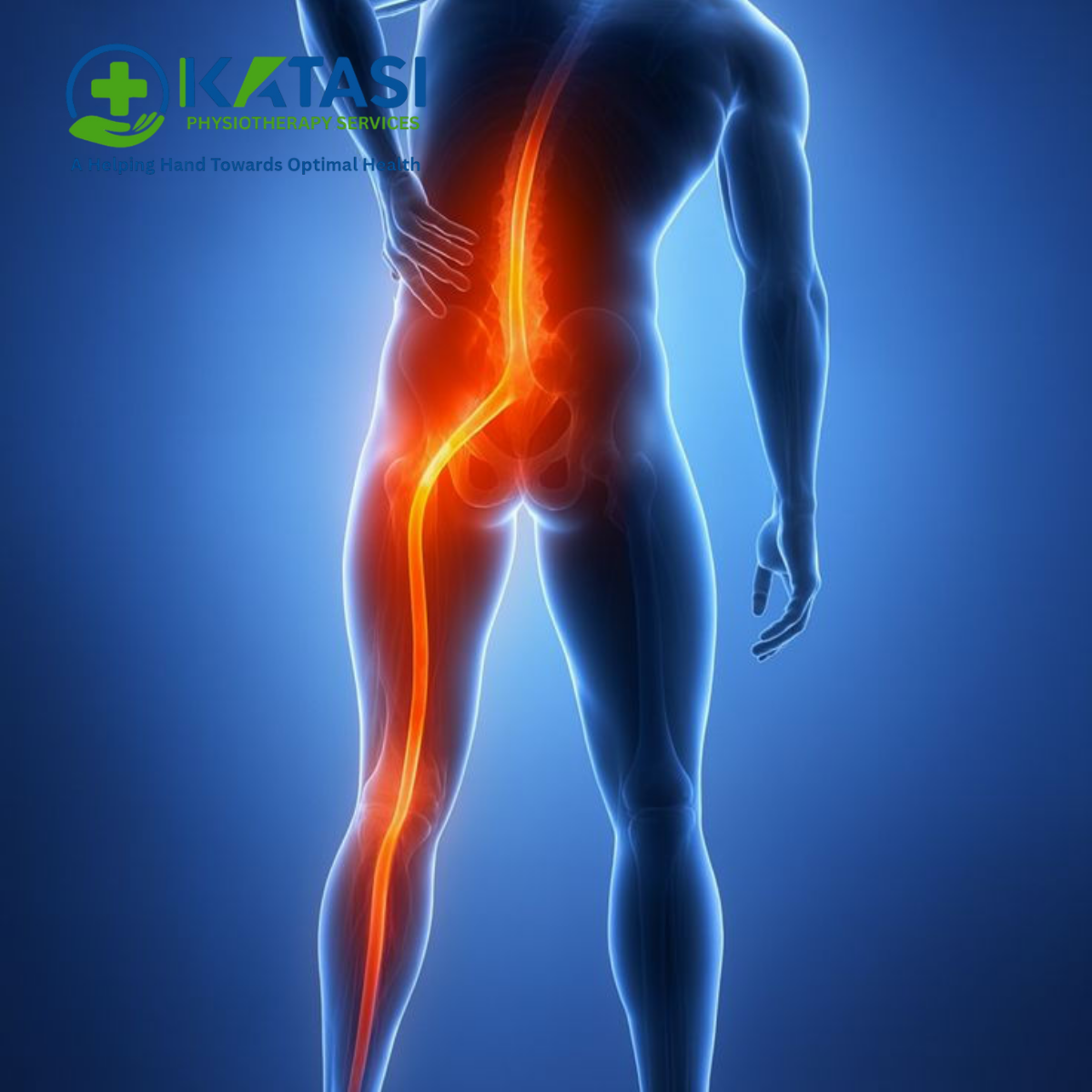
In this case pain starts in the lower back buttocks, travels down thighs or legs, worse when walking or standing and sometimes forces you to stop frequently.
2. Relief When Bending Forward
This is the key diagnostic feature or a way to differentiate lumbar stenosis from other causes of back pain where symptoms improve when sitting down, leaning forward for instance when pushing an object or when bending slightly.
3. Numbness and Weakness
This often happens due to compression of spinal nerves along the cord which may present with tingling in the legs, heaviness or fatigue in legs and reduced walking endurance.
4. Back Pain
Amazingly this may be present but often less prominent than leg symptoms.
Why Do Symptoms Improve When You Bend Forward?
When you bend forward the spinal canal slightly widens and pressure on the nerve reduces. This is why activities like cycling, sitting are easer to do.
Conditions That Can Mimic Lumbar Spinal Stenosis
This condition is critical among clinicians to differentiate it from other conditions such as;
- Sciatica
- Peripheral artery disease
- Hip osteoarthritis
- Lumbar disc herniation
And many older patients may have more than one condition simultaneously, which complicates diagnosis.
How Is Lumbar Stenosis Diagnosed
Diagnosis is clinical first, that is clinical assessment is done which is the most important. Our orthopedic physiotherapist evaluates walking tolerance, posture, neurological signs and symptom behavior. Other special tests are also done to determine the diagnosis.
After this clinical assessment confirmation of this is done by requesting an imaging investigation referred to MRI which is a gold standard investigation. X-ray can also be done to see any structural changes, a CT scan can be done as well depending on priority.
It’s important to note that, imaging alone does NOT confirm diagnosis, the symptoms must much findings from the investigations done.
Best Treatment For Lumbar Stenosis
1. Physiotherapy (First-Line Treatment)
This is the most effective non-surgical approach that is scientifically proven to reduce nerve compression, improve mobility, increase walking capacity and strengthen support muscles.
And a well-structured rehab program can delay or even prevent surgery.
2. Activity Modification
Activity modification helps to prove, worsen symptoms. These include avoid prolonged sitting, walking long distances without brakes instead; do cycling and walk with a slight forward-lean walking posture.
3. Pain Management
This is well prescribed and advice by a doctor who can also work together with a physiotherapist in severe cases.
4. Surgery (When Necessary)
Surgery is not always an option as the first treatment but it is considered when there is severe walking limitation, progressive weakness and loss of function. Most common procedure is a decompression surgery.
Immediately after this procedure upon a doctor’s advice, one will do physiotherapy for rehabilitation.
Can Lumbar Stenosis Be Cured?
There is no complete “cure” because it is degenerative.
However symptoms can be managed and many patients return to normal functional lives.
Final Advice
Lumbar spinal stenosis is one of the most misunderstood causes of back and leg pain, especially in older adults.
The key is not just identifying the condition but understanding the symptom patterns, managing it correctly and restoring function.
With the right physiotherapy approach, you can walk longer, move better, and live pain-free
Author
Moses Katasi - Orthopedic Physiotherapist Book an appointment
BSc, Dip, Post-graduate Diploma in Orthopedic Physiotherapy - AMREF International University, Certified Clinical Physiotherapy Instructor (CPTI) Kenya, Optimal Dry Needling Specialist (ODNS) at International Academy of Orthopedic Medicine(IAOM) - USA.